
'While most companies were bullish before the second wave of double-digit sales growth in FY22, that may not be the case now.'

'I have personally been very keen on investing in lithium ion battery technology for some time.'

Auto-debit payment bounces have gone up for the second consecutive month in May, emphasising the stress building up due to a halt in economic activities as authorities lock down various parts of the country to stop the spread of the virus in the second wave. According to the National Automated Clearing House (NACH) data, in May, of the 85.7 million transactions initiated, 35.91 per cent, or 30.8 million transactions, failed.

Auto sales, particularly of two-wheelers, may not bounce back immediately and may take another two months to come back on track even as car bookings have started seeing an initial uptick. Various states started Unlock 2.0 on Monday, following a fall in the number of Covid-19 cases. Auto sales were hit in May following the impact of Covid-led lockdowns.

The Mumbai Bench of the National Company Law Tribunal (NCLT) on Monday approved Piramal Group's resolution plan for the beleaguered Dewan Housing Finance Ltd (DHFL), which has been reeling from the insolvency process since 2019. The plan put forward by Piramal Group, which has offered to pay Rs 37,250 crore, has been approved by the committee of creditors (CoC), the Reserve Bank of India (RBI), and the Competition Commission of India (CCI).
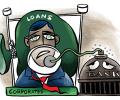
Public sector banks, including the country's largest lender State Bank of India (SBI), have come out with a templated approach for restructuring retail and small business loans of up to Rs 25 crore under the Reserve Bank of India's (RBI) Covid restructuring package 2.0. They have also come out with standardised products to make funds available to business entities for improving healthcare infrastructure and to individuals for meeting Covid treatment expenses. Business loans have been divided into three categories.

In 2020, after the outbreak of the Covid-19 pandemic, several five-star hotel chains commenced home delivery of food as a lot of people preferred to stay indoors. A year later, as the Covid situation worsens, such hotels are going the extra mile to cater for the gastronomical needs of their customers. With health, nutrition, and immunity occupying the mind spaces, these hotels are crafting menus that are not only high on health quotient, but also have food capable of improving the mood. The move, they hope, would help them get more customers as prices are also competitive.
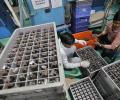
Auto component makers in India are bracing for a tough time. High absenteeism among workers owing to Covid-19, shortages of critical parts, and temporary closures of plants by automobile manufacturers have thrown a spanner in the works for the Rs 3.2-trillion sector, which derives 60 per cent of its revenues from automobile original equipment manufacturers (OEMs), with the balance split equally between replacement demand and exports. Car market leader Maruti Suzuki India on Saturday said it was extending the maintenance shutdown, which was from May 1 to 9, till May 16, "keeping in view the current pandemic situation". Some activities will continue in the plants.

Since April, India has seen multiple strains of the coronanavirus sweep the nation, upending life and businesses alike. Out-of-home retail and discretionary categories such as durables, auto, fashion, lifestyle, hospitality, food services, travel, and tourism have been the worst-hit as Covid cases remain high, leaving state governments with no option but to curtail mobility and economic activity.

These products are extremely transparent and are the lowest charged products in the insurance space. The policyholder has to only pay the fund management charge. Hence, from the cost side, ULIPs are very competitive.

Close to 60 per cent models that Kia sells in India are top trims of the models. In line with its global strategy, the India arm of South Korean major Kia has dropped 'Motors' from its name. This is to reflect the transition from an automaker to a provider of advanced and eco-friendly mobility solutions, the company said. With a new brand identity and slogan, the fourth-largest car maker in India by sales aims to accelerate growth and strengthen its premium positioning.

Durable goods companies and retailers say online sales won't compensate for the fall in offline sales.
The bank has decided to embark on a 'Technology Transformation agenda' to provide its customers smoother, faster, and better banking experience.

GM cites global pandemic as reason for the step. Firm had stopped selling cars in India in 2017 and stopped production completely on December 24, 2020.

The unprecedented rise in Covid-19 infections in the country, which many are terming as the second wave, has also resulted in a rise in Covid-related claims for general and health insurance companies as hospitalisations have gone up. The insurers have received more than a million Covid-related claims as of April, 2021. According to the data compiled by General Insurance Council, the reported claims total 1.014 million, amounting to more than Rs 14,800 crore.

On Day One of the lockdown announced by the Maharashtra Government, it wasn't business as usual for automobile manufacturing units in the State. Confusion prevailed over regulations-what is allowed and what isn't. While some units ran with less than half the workforce, others sought clarity from the government on what is permissible and what isn't.

The five-year (2015-16 to 2020-21, or FY21) compound annual growth rate (CAGR) of the overall auto industry is now negative at 2 per cent, against 5.7-per cent growth it saw in the previous five years (from 2010-11 to 2015-16).
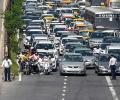
The lockdown in Maharashtra will have a catastrophic impact on April sales, as dealers will not be able to realise the potential of festivities like Ugadi, Gudi Padwa, Baisakhi and Poila Boishakh.

The Reserve Bank of India (RBI) on Wednesday proposed to make interoperability mandatory for digital payments firms. It also allowed users to withdraw cash from e-wallets and fintech companies to process RTGS and NEFT transactions. The RBI expressed dissatisfaction over prepaid payment instruments' (PPIs') failure to migrate towards full-KYC (know your customer) PPIs, and therefore interoperability, even two years after guidelines were issued.

'I see a virtually zero impact on the sales of new vehicles with this move,' said an expert
 © 2026 Rediff.com - Investor Information - Advertise with us - Disclaimer - Privacy Policy - Sitemap - Feedback - About us - Terms of use - Grievances